The observation
Most operators inherit the same competition
Most operators try to become the best version of an existing category. Very few stop to ask whether they should be competing in that category at all.
Most operators think they're competing with better branding. They're not.
They're competing inside a category someone else already created.
A brand competes within a frame.
A category creates the frame.
That's an important distinction because brands compete for preference. Categories determine who gets compared in the first place.
Most operators never question the frame. They build inside of it.
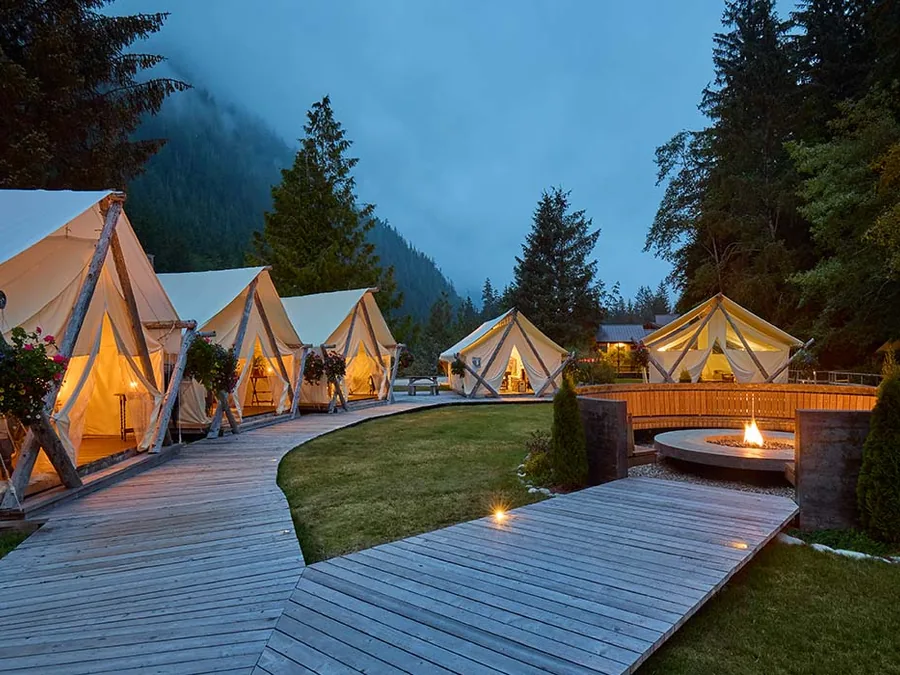
One destination builds luxury tents with ensuite bathrooms. Another adds hot tubs. A third invests in elevated food and beverage. Before long, everyone is benchmarking the same operators, competing on the same dimensions, and chasing the same guests.
Operators routinely ask: "How do I become the best glamping destination?"
A better one is: "Why am I competing as a glamping destination at all?"
You don't beat the competition by becoming the best in an existing category.
You beat it by defining your own.
The hypothesis
Sameness Is Structural
If pricing is shaped by comparison, perhaps the path to pricing power isn't building a better brand—but building a category your brand is first to create.
When I looked across outdoor hospitality, the pull of the pricing gravity well was hard to ignore. Operators benchmark the same competitors, study the same market reports, optimize for the same guest expectations, and gradually converge on the same product. The result is a crisis of sameness.
Nightly rates clustered within a surprisingly narrow band—roughly $150–250 ADR. The strongest operators might sit toward the top of it, but they were still orbiting the same pricing gravity well. Fewer than 5% broke the $350 ADR barrier.
| Nightly rate band | Share of retreats |
|---|---|
| $100–150 | 11% |
| $150–200inside the gravity well | 31% |
| $200–250inside the gravity well | 30% |
| $250–300 | 16% |
| $300–350 | 8% |
| $350+ | 4% |
| At or below $250 ADR | 72% |
Six in ten glamping retreats price inside a single $100 band. Beautiful sites alone rarely create pricing power — weak differentiation pulls everyone toward the same gravity.
Maybe the problem wasn't execution.
Maybe it was the frame everyone was optimizing within.
If guests compare you to every other glamping destination, every operator following the same data adds to the downward pull on pricing. But if I could create a category that changed what Menizei was compared to—or escaped comparison altogether—perhaps I could defy gravity.
That became the hypothesis.
The experiment
Finding the Territory
Instead of asking how I could optimize glamping, I asked what emotional job only Menizei could own.
Every operator I studied competed on features: luxury tents, ensuite bathrooms, hot tubs and nature.
Those weren't categories. They were different combinations of the same ingredients.
So I stopped asking how to build a better glamping destination and started asking a different question:
What emotional job was Menizei uniquely positioned to own?
What territory could I claim?
After months of sketching, prototyping and brainstorming moats, the answer finally emerged.
Forest Cocooning for two.
The makeover
Every decision reinforced one perception
Once I had the category, every decision—from land acquisition to architecture—was made to reinforce Forest Cocooning for two.
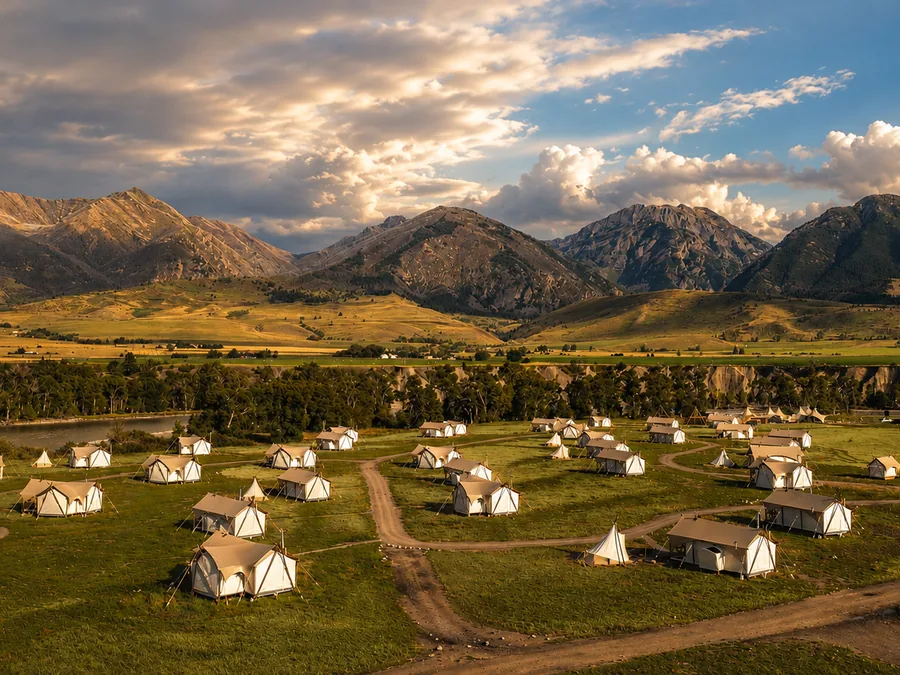
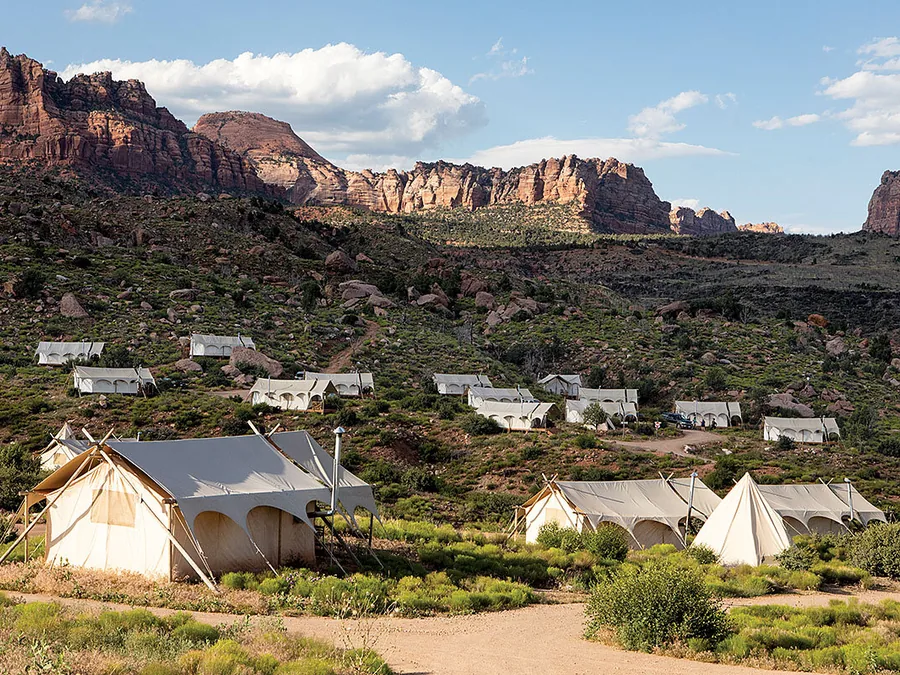
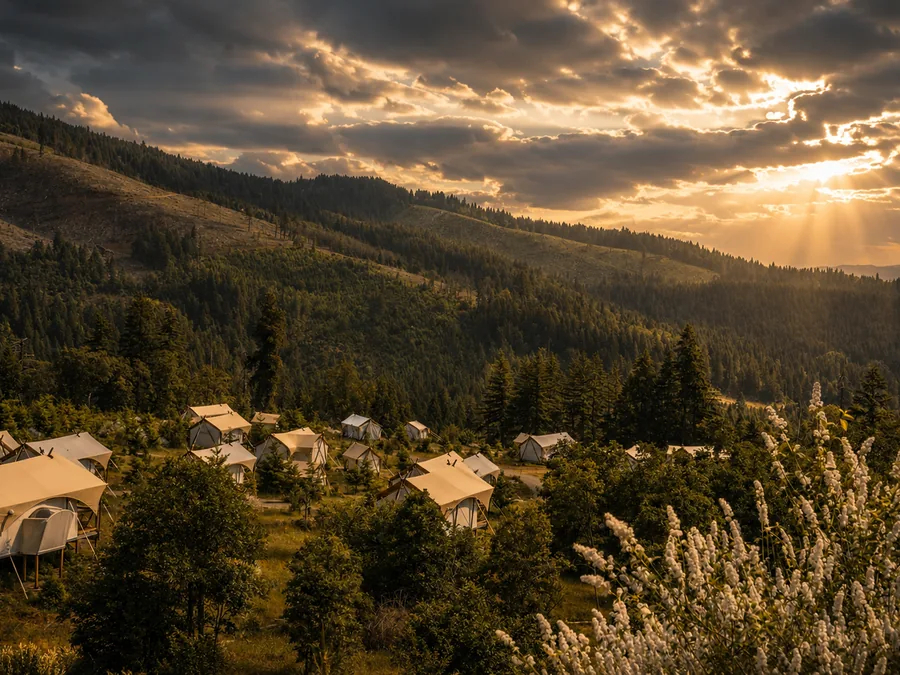
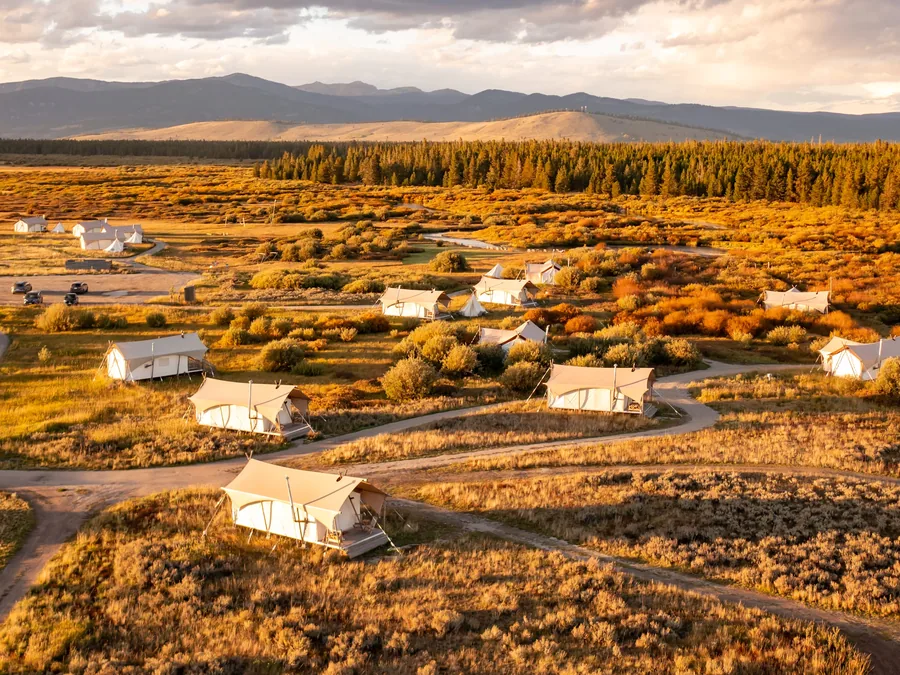
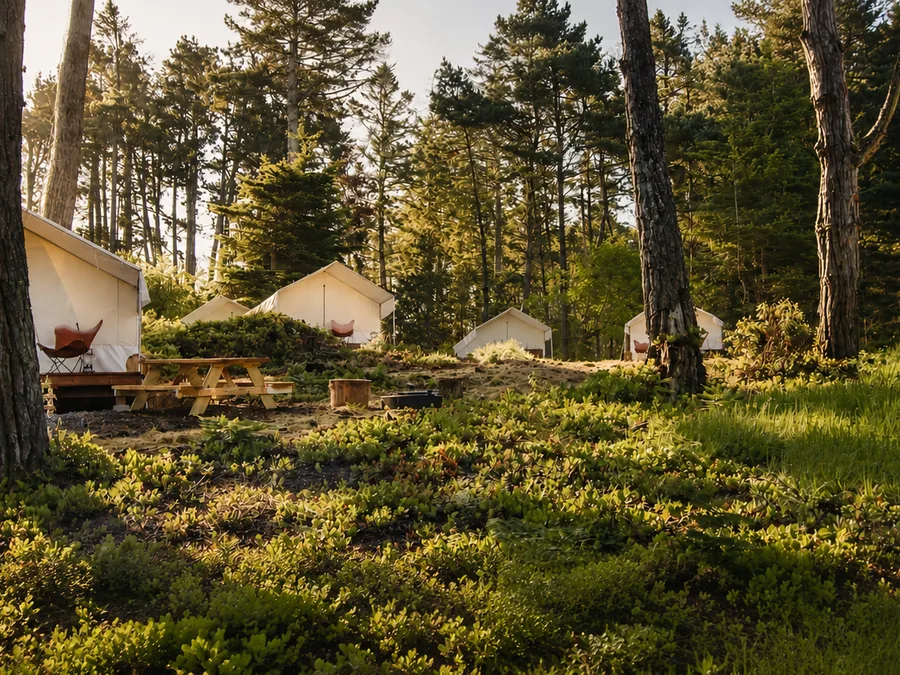
The land. The forest became the cocoon itself. I searched for a property where the basecamps could disappear into dense coastal rainforest, with the bluff creating a natural edge between the forest behind and the Salish Sea beyond. Together, the green space and blue space created a rare feeling of being both protected and removed from the outside world.
The master plan. The basecamps weren't arranged to maximize density. They were spaced to maximize solitude. Every additional foot of separation strengthened the perception that each couple had the forest to themselves.
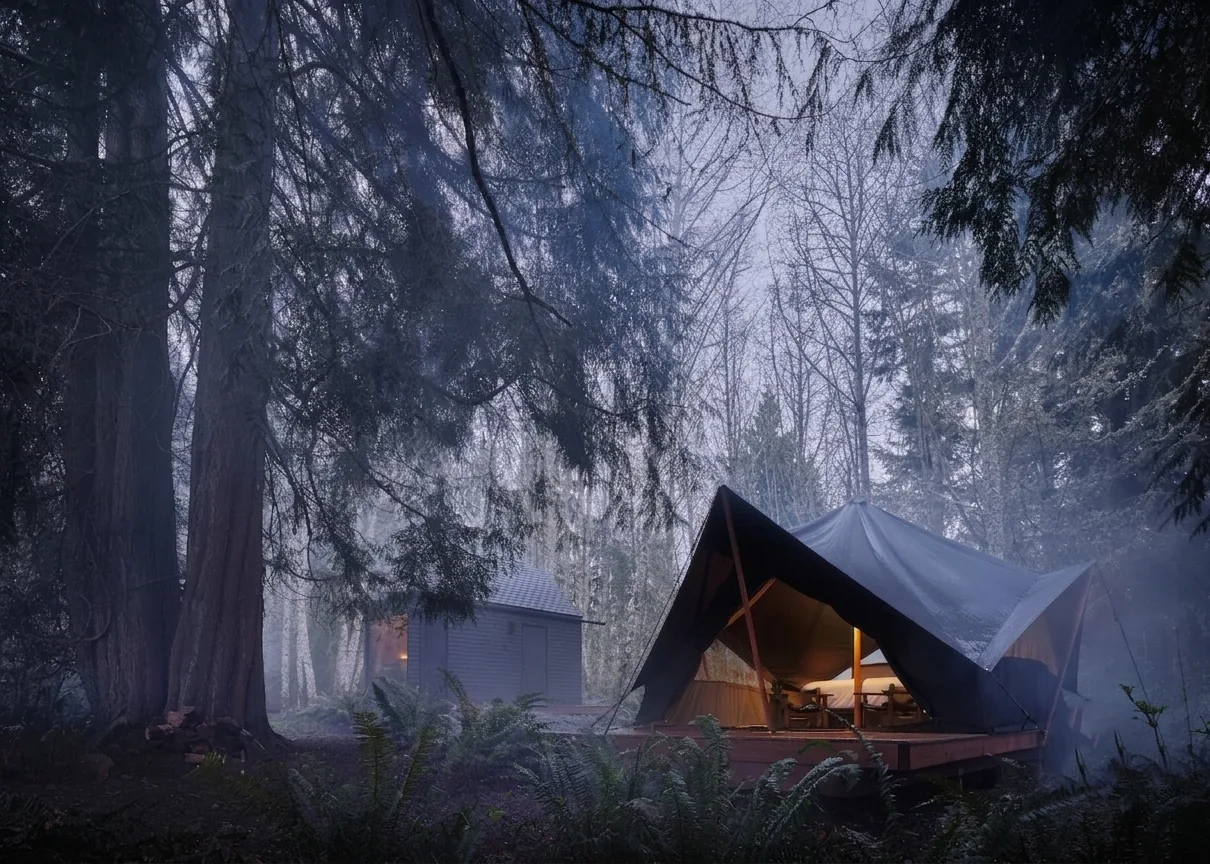
The architecture. The detached bathhouse wasn't simply a place to shower. The architectural form echoes the geometry of a cocoon. Clad in black and tucked beneath the forest canopy, it creates an intimate retreat designed for two. Even the walk between tent and bathhouse became part of the experience, moving guests through the forest rather than insulating them from it.
The materiality. Even the tent was chosen to reinforce the category. Its blackout interior and enveloping form create the feeling of retreating into a cocoon, making restorative sleep part of the architecture rather than simply another amenity.
The weatherscape. Most luxury outdoor stays are designed around summer. Menizei wasn't. The cool, misty climate of the Pacific Northwest became part of the category itself. Rain wasn't the interruption—it was another reason to retreat deeper into the cocoon. The weather became another design material.
The operating model. Adults-only. No pets. Those weren't operational policies as much as category decisions. If the promise was a cocoon for two, every additional distraction weakened it.
What happened
Escaping the pricing gravity well
The category didn't just change how guests perceived Menizei. It changed what the market was willing to pay for it.
The original hypothesis wasn't that Menizei needed a stronger brand.
It was that creating a new category would free it from competing inside someone else's.
Today, Menizei commands roughly three times the average daily rate of a stay around Olympic National Park without relying on many of the amenities luxury hospitality typically competes on.
No hot tub.
No en suite bathroom.
No restaurant.
Yet it consistently commands a premium not because it optimizes for glamping. But because it was built for Forest Cocooning.
The goal was never to charge more.
It was to become incomparable.
Pricing was simply the consequence.
What surprised me
The Press Couldn't Agree
I expected category design to change how guests compared Menizei. I didn't expect it to change how publications described it.
One consequence of creating a new category hadn't occurred to me.
If Menizei no longer fit neatly into an existing category, neither would the stories written about it.
As the property began appearing in travel publications, there was remarkably little agreement about what it actually was. Some described it as ultra-glamping. Others positioned it as the future of luxury hotels. Others simply listed it among the world's most romantic getaways.
None of those descriptions were wrong.
They were simply the closest approximation each publication could find.
That's when I realized something.
Category design doesn't just change how guests compare you.
It changes how the market talks about you.
One actionable takeaway
Try the Amenity Swap
Replace your property's name with your closest competitor's. If most of your website still makes sense, you're describing a category—not creating one.
Open your homepage.
Replace your property's name with your closest competitor's.
Now read the page again.
How many of the sentences still ring true?
If most of them survive, you're probably competing on the same amenities, the same expectations and the same guest promises.
You're describing a category.
Not creating one.
The fastest way to escape the pricing gravity well isn't to build a better brand.
It's to build something your competitors can't simply swap their name into.